Deck Railings & Stairs in Madison, WI:Connected guard systems and comfortable routes into the yard
Madison Deck Builders helps Madison homeowners plan deck railings and stairs as connected parts of the deck, rather than isolated finishing choices. Wood, aluminum, cable and manufactured railing systems offer different views and care needs. Their attachments and layout matter as much as the appearance of a finished sample.
A stair route should fit the door, landing and yard it connects. Discuss graspable handrails, guard placement and the needs of everyone using the space before selecting a system. Reviewing those details together makes it easier to define a railing or stair project that fits the existing structure.
Connected guard systems and comfortable routes into the yard.
Deck Railings & Stairs services
Define the work around the condition and use of your space.
Choosing and supporting a guard system
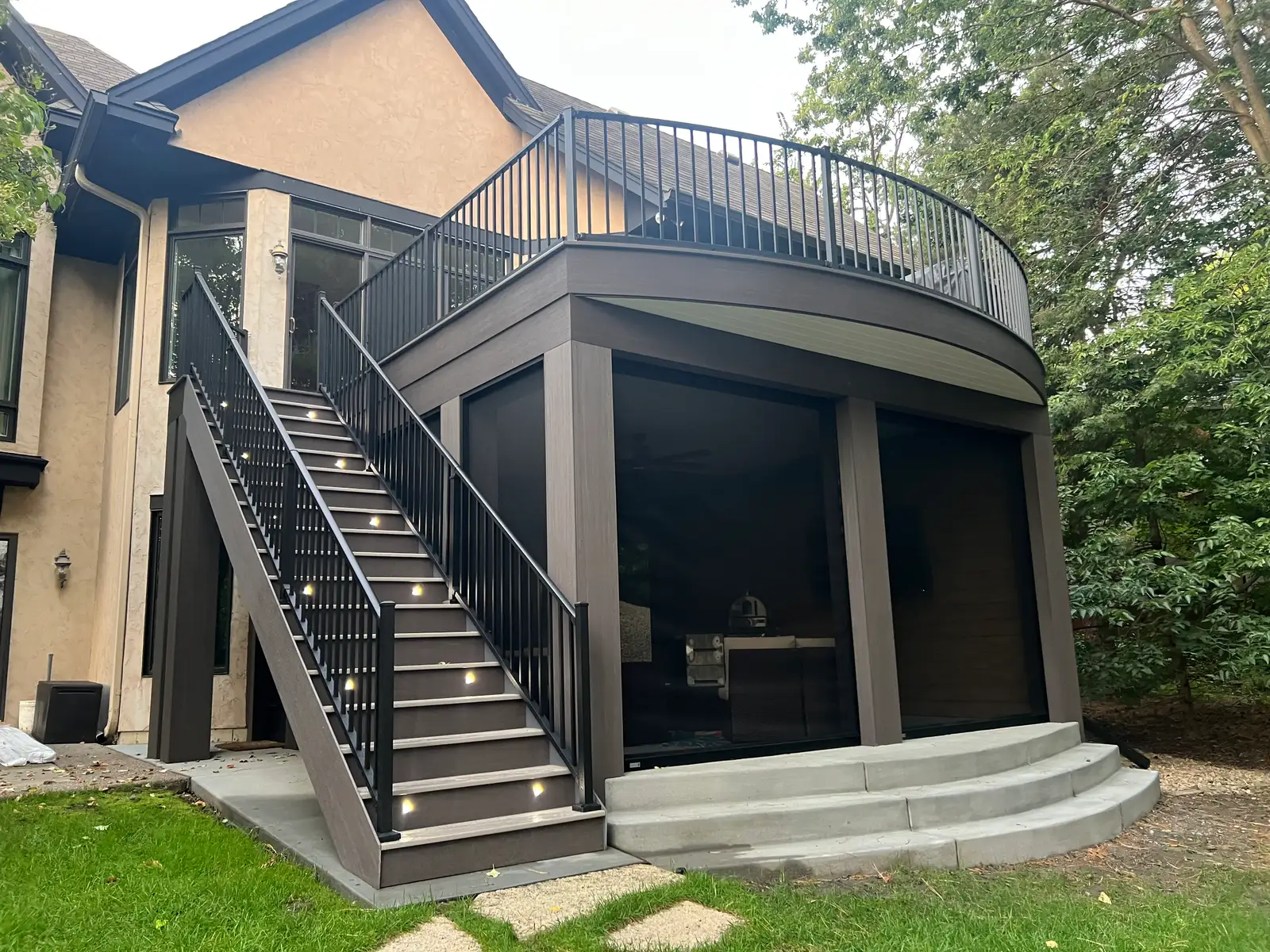
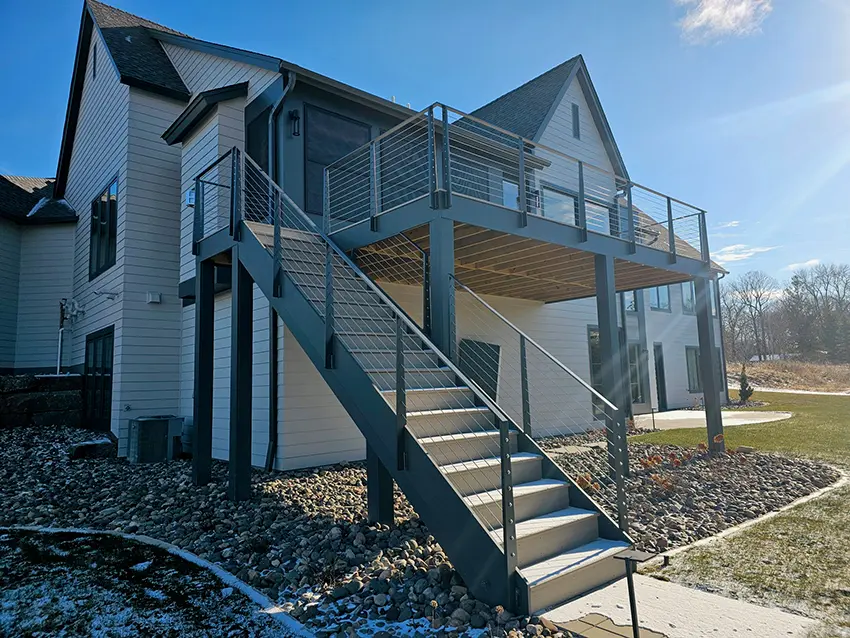
A guard relies on its posts, connections and the frame below it. Cable systems require attention to the intended tension and post design; aluminum and manufactured systems have their own attachment instructions. Compare compatible systems rather than mixing parts based only on color. Guard height, openings and required locations should follow the rules that apply for the project. The proposal should show how posts connect and identify any blocking or structural changes needed below the walking surface before installation.
Planning stair geometry and landings
Stairs need a consistent route between the deck and their destination. Space at the bottom, door swings at the top and the supporting grade all affect the plan. The tread material and stair structure should be coordinated rather than treated as leftovers from the main deck. Ask how landings, handrails and lighting are included. A replacement stair can improve circulation, but changing its location may also affect footings, the deck opening and the surface area available for furniture.
Considering access and everyday visibility
A wider route, a usable landing or a handrail on a particular side can make an important difference to someone using the deck. Discuss mobility needs early, especially if a ramp is being considered. A residential layout should not be described as ADA compliant without establishing which requirements actually apply. Integrated stair lights and clearly defined edges can support visibility, but they do not replace suitable geometry or a stable walking surface. Review the route as a whole before finalizing the details.
The details matter
A replacement railing may require work below the boards
An older deck may lack the support needed for the selected railing posts. Removing boards to add blocking or correct connections can be part of an otherwise limited railing project. Include that framing work in the estimate so the finished system has a defined structural attachment rather than an attractive rail sitting on an uncertain frame.
For a more usable route between the house and yard, review deck access planning while the stair layout is still flexible.
A clear scope connects the first assessment to the finished deck.
Review the existing route
Assess post connections, stair condition and the way people move between the house and yard.
Select a coordinated system
Compare railing systems and define stair, landing, handrail and lighting details with the structure.
Check the completed transitions
Review attachments and usable clearances, then keep the railing manufacturer’s maintenance instructions.
What a complete proposal should cover
Named railing system and compatible parts.
Post attachment and supporting-frame details.
A complete stair, landing and handrail scope.
Access needs and lighting discussed before construction.
Deck Railings & Stairs FAQs
Clear answers before the project takes shape.
Can cable railings be installed on any posts?
+
No. The posts and attachments need to suit the particular system and its loads. Follow the manufacturer’s design and installation documents rather than treating cable as a direct swap for balusters.
Is a guard the same as a handrail?
+
They serve different functions. A guard protects an open edge; a handrail provides a graspable support along a route such as a stair. A project may need both.
Can stairs be replaced without rebuilding the deck?
+
Sometimes. The deck opening, connection and supporting structure still need assessment. The scope depends on whether the surrounding parts remain suitable.