Deck Lighting in Madison, WI:Integrated illumination for steps, edges and outdoor evenings
Madison Deck Builders helps Madison homeowners plan deck lighting around the places where illumination is useful: stairs, entrances, railings and gathering areas. Integrated fixtures can make the deck easier to navigate after dark while keeping bright light out of seated sightlines and neighboring windows. Placement matters more than simply adding more lights.
Plan the power source, compatible parts and wiring access before boards or ceilings close those routes. A new deck and an existing structure may need different installation approaches. Start with the areas you want to illuminate and the way you use the space in the evening.
Integrated illumination for steps, edges and outdoor evenings.
Deck Lighting services
Define the work around the condition and use of your space.
Lighting steps and changes in level
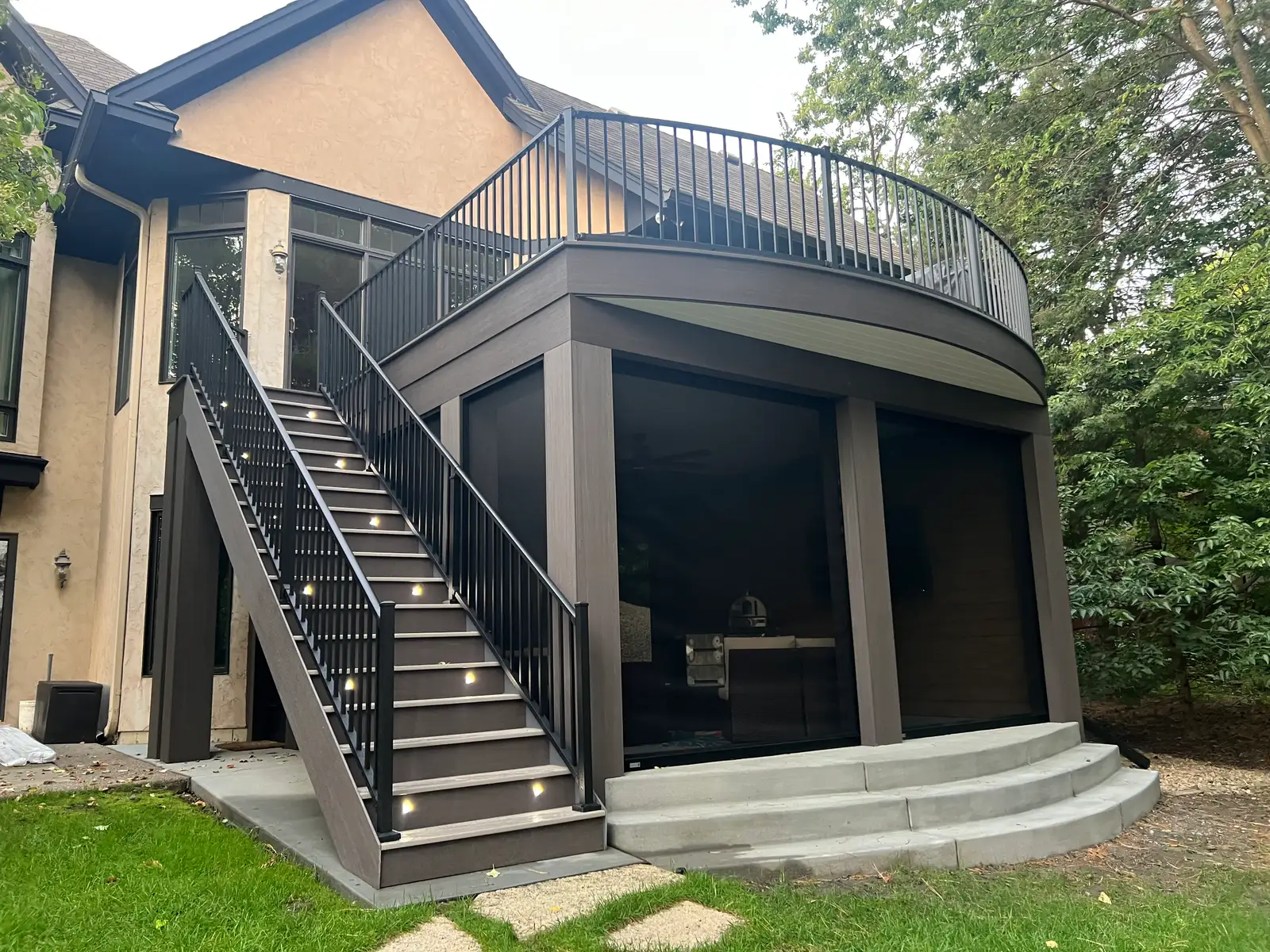
Stair risers, landings and deck edges are useful places to begin a lighting plan. The goal is to reveal the route without placing a bright source directly in someone’s eyes. Fixtures should be positioned consistently and coordinated with the stair material and railing arrangement. Review the proposed locations from both the deck and the yard. A fixture count alone does not describe the result; the plan should show which transitions are illuminated and how the light is directed.
Coordinating the power and controls
Low-voltage systems still need a suitable power supply and compatible transformers, connectors and fixtures. Trex’s LED installation guide, for example, describes a 12-volt system and system-specific parts. Those instructions apply to that system. Voltage and parts vary by system; follow the instructions for the exact product you choose. Discuss transformer location, control options and accessible routing before construction hides the wiring. Where line-voltage work or a new supply is needed, define the qualified electrical scope and applicable approval requirements rather than treating it as an incidental deck accessory.
Keeping wiring and fixtures serviceable
Lights can require cleaning, adjustment or eventual replacement. The design should leave accessible connections and suitable cable routing around drainage, framing and finished ceilings. Existing decks may need some board or trim removal to achieve that access. Fixtures and parts should be rated for their intended exposure and installed as directed. Ask which parts can be replaced individually and what details you will receive at handoff. A tidy appearance should not make a small future repair unnecessarily disruptive.
The details matter
Use a lighting layout instead of a fixture shopping list
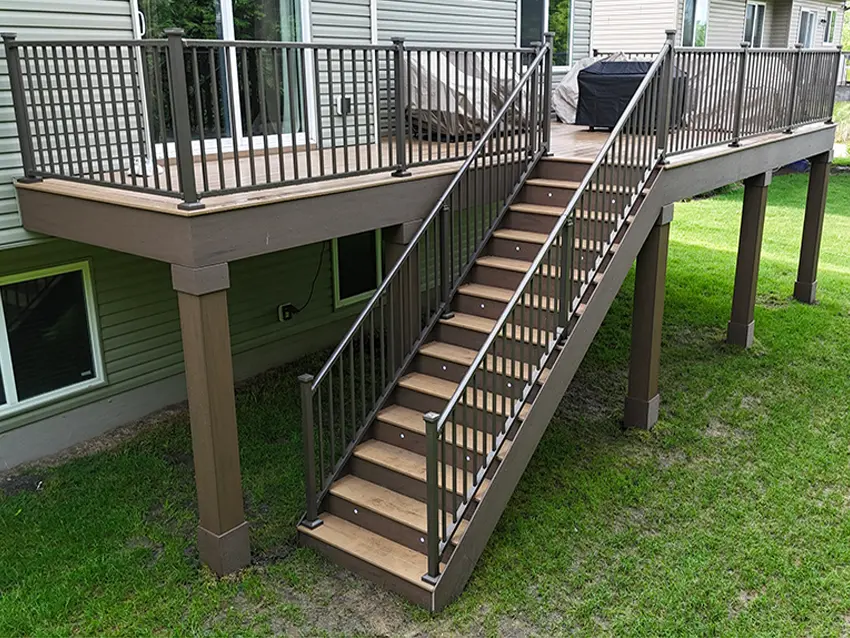
Post caps, recessed riser lights and under-rail fixtures serve different purposes. Compare them on a simple deck plan that includes furniture, stairs and neighboring sightlines. If possible, review the intended effect after dark before final adjustments. The selected system’s instructions should guide both installation and care; decorative appearance does not establish electrical suitability.
For stair-focused work, coordinate illumination with deck railings and stairs while attachment and wiring access remain available.
Often it can be considered, but access for wiring and attachments determines the scope. Some trim or boards may need removal. Review the structure and power supply before choosing fixtures.
Does low voltage mean no electrical planning is needed?
+
No. Parts, supply, routing and exposure still matter. A new line-voltage supply can introduce a separate electrical scope. Follow product instructions and local rules that apply.
Can deck lighting replace stair handrails or guards?
+
No. Illumination supports visibility; it does not replace required structural or access features. Coordinate the lighting with a suitable stair and railing design.