
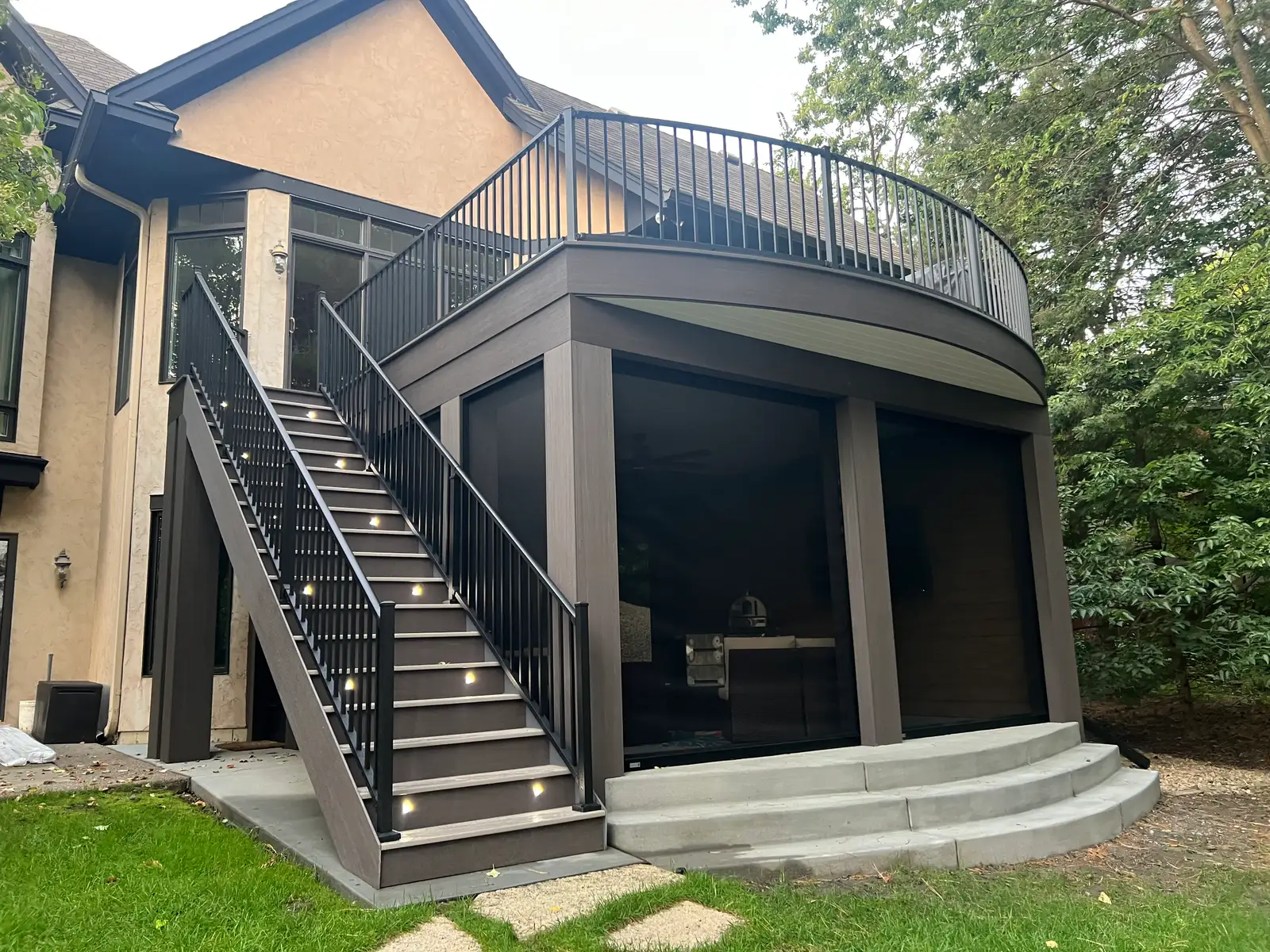
Wood: appearance and regular care
Treated wood and cedar offer natural variation and a finishing decision that can change over time. Specify the lumber intended for the structure separately from the walking boards. Fasteners, treatment and drying details should suit the use.
Cleaning, inspection and finish care remain part of ownership. A natural weathered appearance still calls for attention to moisture and connections. Before choosing wood, decide how much surface upkeep you are willing to undertake and what appearance you expect it to keep.
Composite and PVC: compare the actual board
Manufactured decking varies in formulation, profile, surface texture and protective layers. Compare the selected product line’s support spacing, gaps, fasteners and care instructions. The same color name across different collections does not guarantee the same performance.
View samples outside beside the house. Direct sun, darker colors and the intended use influence comfort. Low maintenance means a different care routine, not an absence of cleaning or seasonal attention. Keep the exact product details with the project records.
Steel and wood framing: compare complete designs
Framing choices should be evaluated with the same deck layout, intended loads and surface. A steel system has its own parts, span details and connection details. Wood framing also needs suitable material details and a sound design.
Compare footings, attachments, stairs, drainage compatibility and finishing scope for both alternatives. A material label cannot promise a universal lifespan or make structural review unnecessary. The named system’s technical documents should support the proposed system.